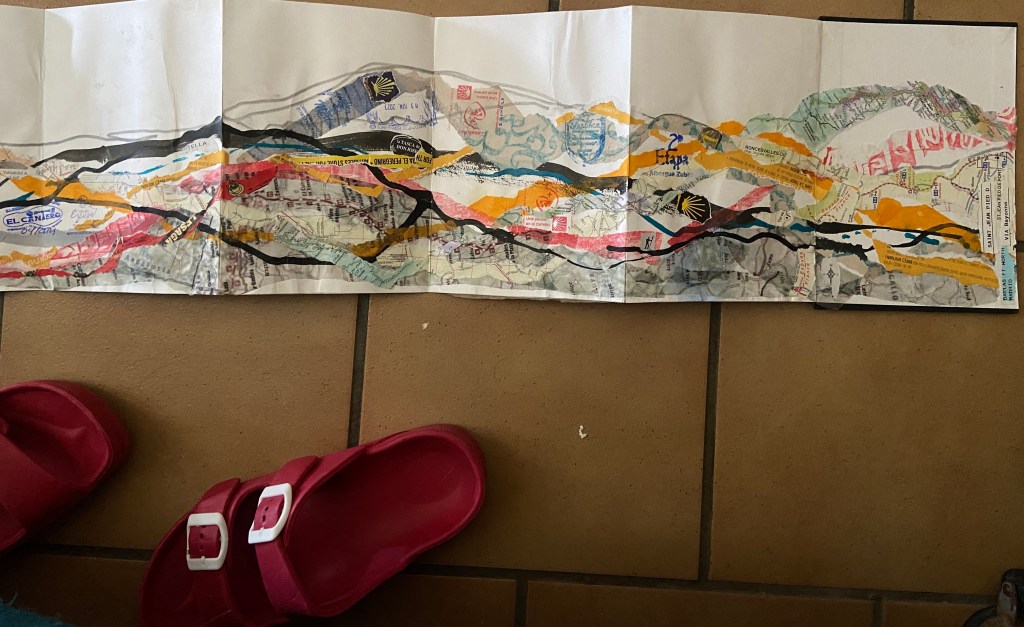
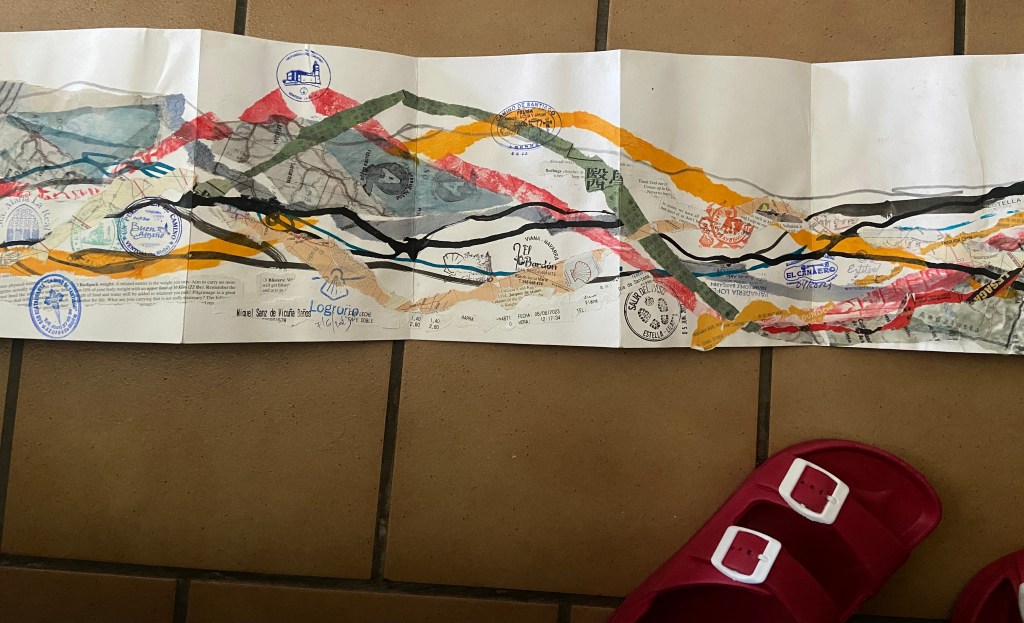
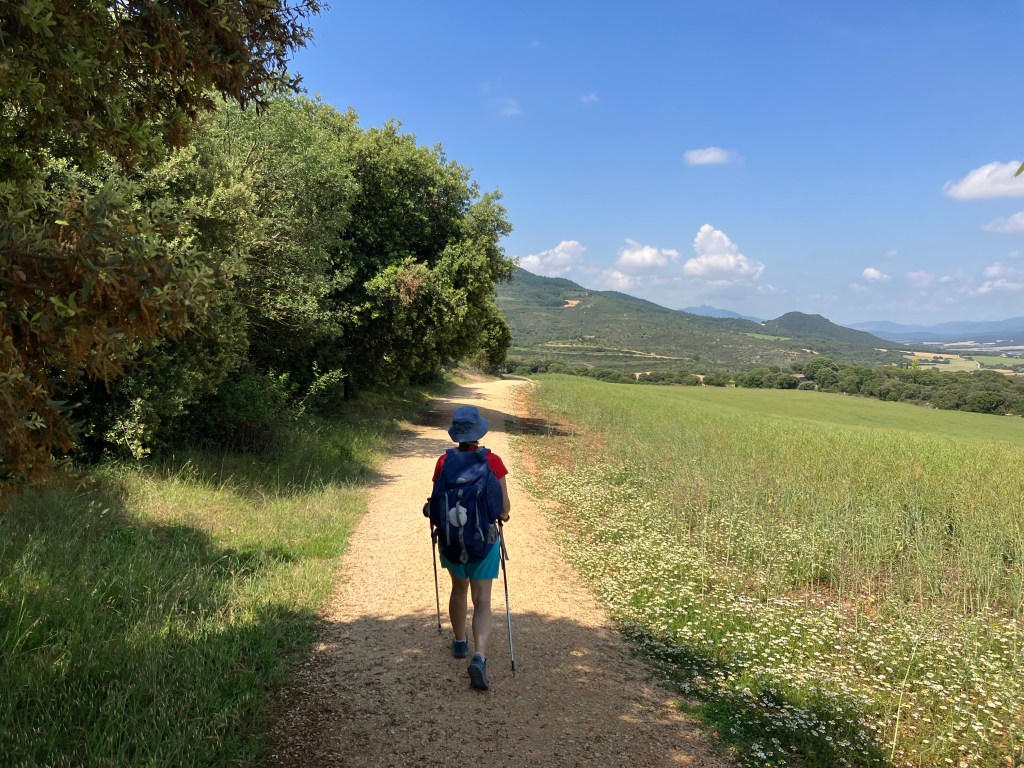
36” · 48” Acrylic and oil on canvas
Because They Had Less
We met a pilgrim named Beau who was walking with his wife and their seventeen-year-old son.
They had been covering long distances and feeling strong—until suddenly, they were not.
Beau suffered a severe flare-up of gout. By the time they reached their albergue one evening, he was in terrible pain. He struggled up the stairs to their room and could barely move.
His wife went downstairs to the café and asked if she could take dinner up to him.
“That is not an option,” the hospitalero told her. “He must come down and eat in the café.”
She was tired and worried. As she climbed the stairs to help Beau, she thought, I should have carried more food.
Together, she and their son helped him down to the café.
The moment the hospitalero saw Beau, his firmness disappeared.
“Oh, no! What happened? What is wrong?”
In broken Spanish, they tried to explain the gout and the pain in Beau’s foot.
Then the hospitalero lived fully into the meaning of his name.
He welcomed them to the table and fed them. While they ate, he called a local doctor. The doctor arrived with a pharmacist and someone who could translate.
No one asked for payment.
Had their packs been full, heavy with provisions intended to protect them, they might have remained upstairs, alone in their suffering.
They would have eaten.
But they would have remained unseen.
Instead, their need became an opening.
Because they had less, they received more.
Because they could not carry everything, they were carried.
At a simple table in a small Spanish village, they received far more than dinner or medicine. They received the care of strangers who saw their need and responded as though they belonged to one another.
There, they tasted something more delicious than bread.
They tasted trust.
As their packs grew lighter, something else began to fill the empty space—not more possessions, but gifts:
Gratitude that catches in the throat.
Humility that softens the heart.
And the wisdom that we were never meant to walk this road alone.
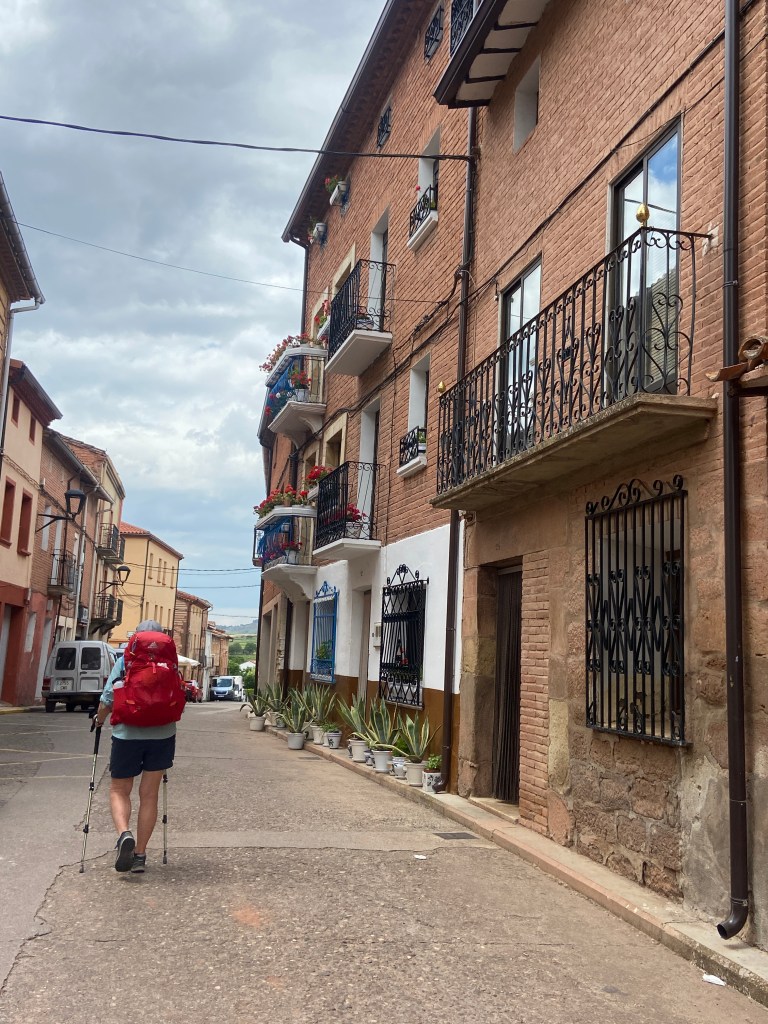
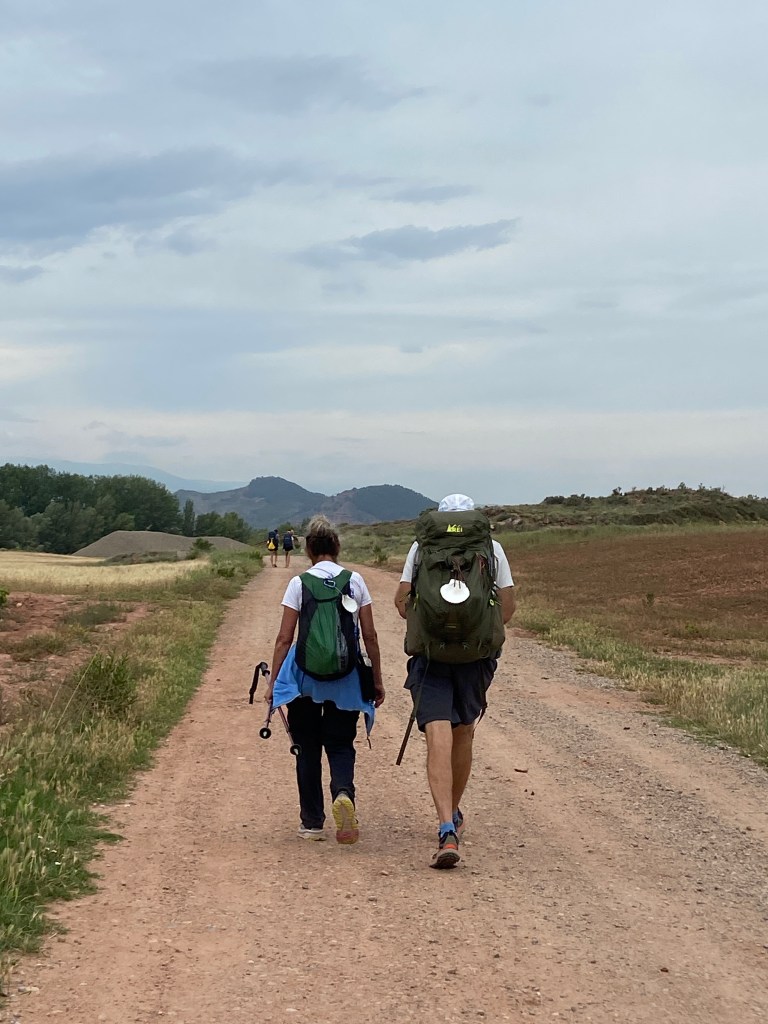
I’m so excited to invite you to the opening of When the Road Becomes Prayer: Paintings from the Camino de Santiago. This exhibition brings together paintings and stories inspired by walking the Camino with my family—what we carried, what we received, and what the road taught us along the way. There are many more paintings and stories to share! Please join me for the opening and artist reception Sunday, September 27 at 2:00 PM at St. Matthew’s Cathedral in Dallas. I would love to see you there!